Welcome to WordPress. This is your first post. Edit or delete it, then start writing!
Blog
-
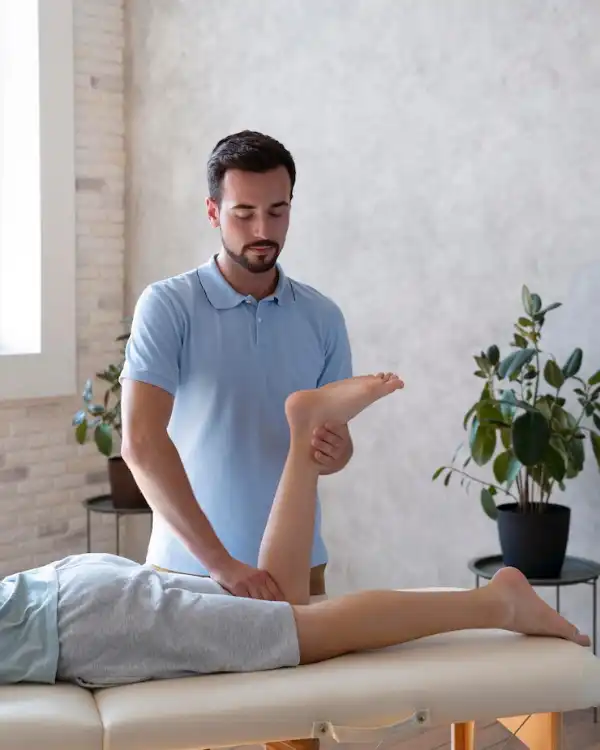
Why Florida Physio Is the Go-To Physical Therapy Clinic in North St. Petersburg
When Your Recovery Demands More Than Generic PT
Let’s be real — there’s no shortage of physical therapy clinics in St. Pete. But if you’re in North St. Petersburg, and you’re serious about real results (not just going through the motions), there’s one name that continues to stand out: Florida Physio.
Whether you’re a golfer trying to fix that nagging swing-related pain, an athlete recovering from injury, or someone who simply wants to move better and hurt less — Dr. Leighton Peavler and his team are changing the game with their personalized, performance-driven approach.
120+ Five-Star Google Reviews and a 5-Star Facebook Rating
We’re not just saying Florida Physio is the best — the community is saying it for us.
With over 120 five-star Google reviews and a flawless Facebook rating, patients consistently highlight one thing above all: results.
“First time going to Florida Physio, and I can definitely say I will be back… I now understand what I can do to hit the ball more solidly and consistently.” – Rick N.
“I’ve seen improvement in core strength, yardages, and my handicap — and rehabbed two injuries along the way.” – Andy C.
“Leighton has integrity, deep knowledge, and tailors treatment to YOU. He referred me out when PT wasn’t the right fit — and that’s rare.” – Dr. MemelThese aren’t scripted testimonials. These are real people in the community who found answers here — when they couldn’t find them anywhere else.
Meet Dr. Leighton Peavler – The Golf PT Guy (And So Much More)
Dr. Leighton Peavler, PT, DPT, OCS, isn’t your average physical therapist. He’s a board-certified Orthopedic Clinical Specialist, former Division I golfer, and a specialist in golf rehab and performance optimization.
A few things to know:
-
Doctor of Physical Therapy with Honors from the University of St. Augustine
-
Orthopedic Clinical Specialist (OCS) – the gold standard in musculoskeletal care
-
Titleist Performance Institute Certified – trained specifically to help golfers rehab and improve
-
Former college athlete who understands performance at every level
-
Lives in St. Pete with his wife (a healthcare provider for the WTA) and their two children
In short: Dr. Peavler lives and breathes movement, performance, and recovery. Whether you’re trying to return to your sport, your daily routine, or your peak performance — he knows how to get you there.
Specialized Care for Golfers, Athletes, and Active Adults
At Florida Physio, care isn’t one-size-fits-all. It’s built around your goals, your sport, and your body.
One of the most unique things about the clinic? Its golf-specific rehab and performance training.
Using the Titleist Performance Institute model, Dr. Peavler helps golfers of all ages:
-
Improve swing mechanics without pain
-
Increase mobility and power
-
Rehab chronic or acute injuries
-
Extend playing years with smart injury prevention
This isn’t just therapy — it’s golf science meets orthopedic precision.
But Florida Physio doesn’t stop at golfers. The clinic treats:
-
Post-surgical patients looking to shorten recovery time
-
Athletes of all levels returning to sport
-
Adults with chronic pain or movement limitations
-
Weekend warriors just trying to stay active without breaking down
Integrity That Builds Long-Term Trust
What makes Florida Physio different isn’t just the credentials — it’s the ethics.
When Dr. Memel came in with a hip issue, Dr. Peavler didn’t try to sell him on weeks of treatment. He told him the truth — PT wasn’t the right answer for that problem. Then he helped him find the right path forward.
That kind of honesty is rare in healthcare. But at Florida Physio, it’s the standard.
From there, Dr. Memel returned to Florida Physio for back rehab and golf fitness — and has become a loyal patient ever since.
This is a clinic that doesn’t just treat — it teaches, empowers, and partners with you for the long haul.
Why Locals Choose Florida Physio in North St. Petersburg
Still on the fence? Here’s a quick breakdown of what sets Florida Physio apart:
– 120+ Five-Star Google Reviews
– 5-Star Rating on Facebook
– Board-Certified Orthopedic Specialist (OCS)
– TPI-Certified Golf Rehab & Performance Care
– Personalized, ethical care you can trust
– One-on-one sessions — no cookie-cutter plansWhether you’re a golfer, athlete, or active adult, Florida Physio delivers outcomes that stick.
Book Now – And Get Back to Moving Better, Living Stronger
If you’re in North St. Petersburg and you’re tired of clinics that treat everyone the same, it’s time to step into a place that treats you — and only you.
Florida Physio is where movement meets precision, and where your goals actually drive your care.
Schedule a session with Dr. Leighton Peavler today — and take the next step toward pain-free, powerful performance.
-
-
Golfers: Balance Your Swing with the help of TPI Golf Physical Therapists
Have you ever been to a professional golf tournament? Or have seen a collegiate or high-level scratch golfer hit balls on the range? One of the most apparent things you’ll notice in better players is their ability to swing the club at high speeds and then stick and hold their finish comfortably https://www.youtube.com/shorts/k1iuY_7yu7o . Think about it…those pros and collegiate players on average swing 15-25 mph faster than the average amateur golfer, yet they’re able to strike the ball and hold their finish with relative ease.
No, it’s not some random phenomenon with no reasonable explanation. While those players on the pro or collegiate tours might be a few years younger or played more golf than the average player, reaching a maximized, balanced, and athletic swing isn’t out of reach for us mere mortals.
First, let’s break down what a golf swing really is: a high-speed, 2-direction, torquing action that involves a significant weight shift all while swinging a weighted club in a specific manner. With that in mind, when you think of working on becoming a better player, it may be mostly beneficial to become a better athlete. But don’t worry, I’m not implying you spend your whole day in the gym and cut out your favorite desserts.
A prerequisite for all great athletes is a considerable amount of postural awareness and strength, which creates a substantial level of stability. Whether, you’re a running back in the NFL https://www.youtube.com/shorts/K5Cw6BRTG7k , an NBA point guard https://www.youtube.com/shorts/CtSpQE4nAJM (this one mayyyyy be fake), or a PGA tour player, balance training can be just as important as working on mobility or power. It sounds simple. Just balance! But the type of balance that will help you become a better golfer requires a well-detailed, scaled program that effectively challenges you.
For example, training yourself to maintain a single leg stance for 1-minute may be less applicable or have less effect on your swing as practicing full swings in a narrow base of support stance stance against resistance. Balance exercises need to be challenging and sport-specific for real, noticeable improvements to be made.
We rely on 4 things to maintain balance:
First, we use our vision to give us information of where we are in space.
Second, our vestibular system in the inner ear helps detect gravity, which further provides feedback on where we are.
Third, our somatosensory system gives us information on pressure and stretch, which allows us to detect the ground with our feet and have an understanding where the head is on our frame.
And finally, strength gives us the framework to support ourselves despite external forces acting on the body.
As physical therapists, we have the tools and the knowledge to identify if you are underutilizing or over utilizing any of these systems. Golf in particular has its unique challenges to balance. Oftentimes we tend to over rely on our vision to remain steady. But this reliance is less advantageous in the golf swing where your eyes are solely fixed on the golf ball for most of the swing. So, making sure the other systems are firing on all cylinders is critical for playing good golf long-term. As I alluded to, specific types of strength training are generally most effective in working on these systems as it teaches the body to maintain a position or a certain movement despite an added resistance. But not all balance is created equal. Ironic!
Balance is broken down into 2 categories. First, static balance is the ability to maintain a position despite any conditions that may be working against you, here’s an example https://www.youtube.com/watch?v=O4pFdLJmG7M . On the other hand, dynamic balance is the ability to maintain continuity with a desired movement despite external forces, here is an example https://www.youtube.com/shorts/49dvlza5Snw .
In golf, static balance is being utilized when a golfer is able to stay stable in a setup position despite fighting windy conditions or having an uneven lie. On the other hand, dynamic balance is when a player makes an effective move on the golf ball despite the conditions of the shot. With that being said, having sufficient dynamic balance will be more essential to making good, consistent golf swings allowing you to shoot better scores.
Long story short, sport-specific strength training that challenges your dynamic balance is the most effective way to improve this aspect of golf fitness. At Florida Physio we’ve specifically designed our in-house balance programming and 8-week at Home Balance Program to address those exact needs. Finally, once you learn this program, balance training should be incorporated in your weekly maintenance programs and should be assessed and reassessed often. This becomes even more important as you progress through strengthening and power training blocks for improvements with swing speed. Increases in speed are much less effective if you cannot maintain consistent stability in your golf swing.
-Dr. Donald Wasoff, PT DPT TPI Certified
-
How To Ease Yourself Back Into Golf After a Break
Henry Foster of @SkilledGolf
There are times in our lives where we may play golf every day of the week. Yet, there are other times where we may not pick up the sticks for months. These long breaks from golf sometimes prove to be good for our game. Many people realize that a few of their swing flaws seem to disappear when they take a break.
However, there are a few essential things to remember about coming back from golf after a long break. We want to ensure that you make your return safely and minimize any potential injury as well. Here are some great tips to get back into golf after a long break.
DON’T START ON THE FIRST TEE
Golfers that have been out of the game for a while will often be anxious to make their return. They will head out to the first tee, pull the driver out of the bag, and try and rip one down the center of the fairway.
Sometimes this can go well for a golfer, and other times it will be painful. Swinging a golf club requires quite a bit of muscle involvement and strength. If not done correctly, it can easily lead to injury. When you consider that golf drivers are swung at over 100 miles per hour, you can see how an improper swing could cause some issues.
If you are making your return to the game of golf, you must start small. In fact, you should do nothing more than a chip in the beginning. Do not run-up to the first tee and grab the driver. Your transition back into the game should take time, and that is entirely acceptable.
STRETCHING IS IMPORTANT
Whether you are making a transition back into golf or playing golf every other day, stretching is essential. Golfers tend to skip this step, and it is one of the best preventative measures out there. If you want to play golf your entire life and avoid injury, stretching is critical.
It’s not enough to reach down and touch your toes once before you start swinging. You should focus on stretching your back, legs, arms, wrists, and shoulders. Find a great stretching routine that will allow you to loosen up your muscles prior to a round of golf.
SHORT GAME IS KEY
The short game is the best possible way for a golfer to reenter the game. Practicing chipping and pitching is much easier on your body than hitting full swing drives. Another great thing about the short game is that it is a miniature version of the full swing.
If you can establish proper fundamentals in your short game, you can carry those into your long game. When you decide you want to get back into golf, grab a wedge and a few balls. Start hitting shots that go twenty or thirty yards.
Focus on your tempo and hitting shots that land softly on the green. Do not worry about distance at this point. If your fundamentals and your tempo are great, the distance will come. Practicing your short game should be fun. You can choose different targets, play around with your gap wedge, sand wedge, and lob wedge as well.
Practicing your short game is not only going to help you ease your transition into the game; it will also make you a better player. Even after you start playing golf regularly, you should dedicate time to practicing your short game regularly.
START WITH NINE HOLES
Eighteen holes of golf can be taxing on your body. If you have been out of the game for a long time, playing eighteen holes may be pushing it. Golf courses have a perfect solution for you, a nine-hole round.
Nine-hole rounds will let you feel as though you are getting back into the game. You will enjoy time out in nature for a few hours, get a few chances to see where your game stands, but you won’t be pushing yourself too hard either.
The nine-hole round generally takes about two hours to play. This is another reason that nine holes is an excellent way to get back into the game. Spending 4-5 hours on an eighteen-hole round could be a bit more than your body is ready for.
Playing a solid round of nine holes is a much better experience than having to walk off the course after fourteen holes. If you push yourself too hard initially, you may find that it is not worth it.
WALKING IS HELPFUL
Some people think that walking the golf course is going to add additional strain and work to your transition back into the game. This is not true. Walking is very good for your body, and it could help ease your transition back into golf.
Walking allows your body to stay limber the entire time you are on the golf course. When you use a golf cart, you will be stopping and starting much more often. You will also spend a lot of time sitting where your muscles will get cold again.
The best way to walk the course is using a golf pull cart. Trying to carry your golf bag can be rough on your back and shoulders. The pull cart is easy to use and makes walking the course much more enjoyable.
A nine-hole round of walking is a better transition into the game than eighteen holes on a cart. Your body will thank you for this!
ALLOW YOURSELF TIME
A transition back into golf after a long break can take quite a bit of time. You will also need to consider how long you have been out of the game. If you have not played for a week or two, it may only take a quick session on the range to get you back into the game.
However, if you have not played for months or even years, you need to consider giving yourself a few weeks to get back in the game. Start by heading to the driving range and bringing only a wedge and a nine iron.
Hit half shots and chip shots and eventually work your way into full swings. Do this for a few days and then transition into mid irons and hybrids. Focus on your tempo and your balance. Your distance may be lacking, but it will eventually come back.
If you start looking for distance the second you get back in the game, you will develop some pretty terrible habits. Take things slow and work your way up to the driver. Once you get to the driver, hit two or three and then back it down to the wedge.
There is no reason to stand on the range and hit 45 drives in a row. This is a tip that you should remember not just when easing back into golf but at all times. Make practice sessions as realistic as possible. Is there ever a time on the course where you would hit 45 drives in a row? Clearly, there is no need to practice this.
SUMMARY
As you can see, there are three main takeaways when you are ready to pick your clubs back up. You need to give yourself time, start small, and take care of your body. If you put yourself first and forget about trying to hit the ball 300 yards your first time out, you will have a much longer golf career. The primary issue that we are trying to avoid is an injury. Injuries will happen when bodies are not ready to start playing and competing again. Get through the transition period safely and injury-free, and you will be back to your old self in no time.
-
Shoot 80 without pain or Shoot 70 with pain?
Lets play out 2 scenarios. Would you rather….
OPTION A
Have a season long scoring average of 70 that came with 2/10 low back pain during the round and 4/10 low back pain for 3-4 hours after each round?
OR
OPTION B
2. Be pain free and have a scoring average of 80?
Im a golfer at heart and care more about performance than pain. I’m taking Option A all day.
Several Professional golfers are in the same boat. They’d rather make cash money for 3 years with back pain, than correct their swing fault and fight misses.
We have to match-up the swing to the player.
I know I’m a big hater of restricting the hips in the back swing and early extension in the down swing for reasons related to consistency in the swing and stress to the lower back, elbows and wrists.
However, a conversation sparked with @ben.shear last week as well as learning from the #ultimategolflesson with Mike Adams and @terryrowles, I have to admit my thinking was extremely narrow minded.
Just like physical therapy, there is never a one size fits all and we have to match the players swing to what their body can do. Mobility restrictions are important to chip a way at, but what if in addressing them they make a player worse?
This was my over 5 years ago when I was down to a +2. Restricted hips and early extension.
My swing when I was a +2, note the early extension and restricted hips.
I’ve said it before in other posts, there are 4 ways to get better at golf- Technique
- Your Body
- Equipment
- Course Management/Psych
Finding an expert who can work on your body while marrying what you can do with your technique has to yield the best results!
Get assessed, create goals, make a plan, and stick with it!
-
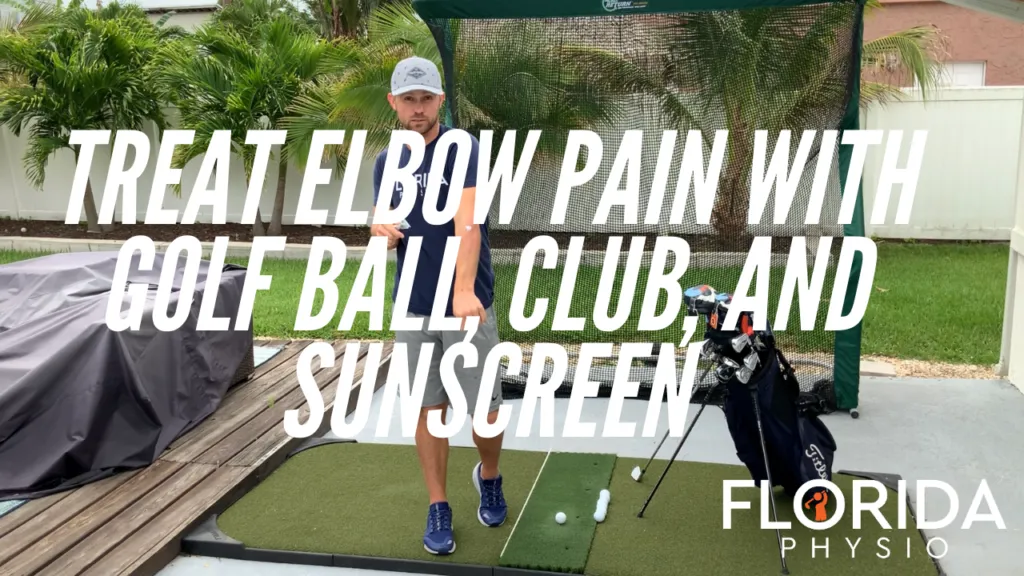
Golfer’s Elbow: Treat your elbow pain with items from your golf bag
Elbow pain can certainly prevent golfer’s from playing their best…or even playing at all.
In the next two videos, we talk about ways to treat your golfer’s elbow, tendinitis, or tendinosis.
If you have elbow pain, we recommend calling us for a consultation because individualized approaches work better.
Here are some strategies I use to treat elbow pain.
Treat Elbow Pain with Golf Ball, Club, and Sunscreen
-
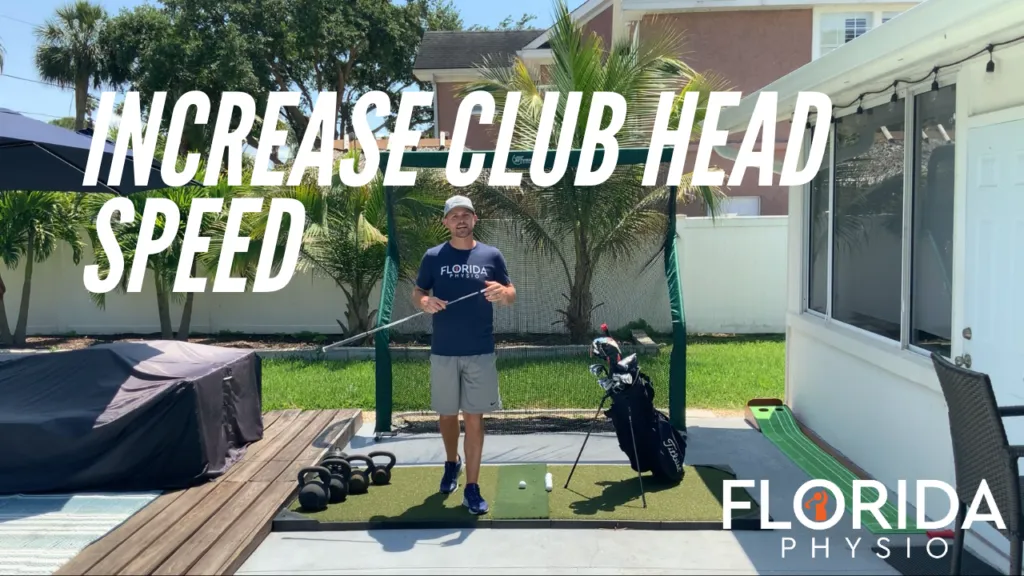
Increasing Club Head Speed
These Are The Types of Exercises You Should Focus On To Increase Club Head Speed
To hit the ball further, there are 4 main exercise categories the best players in the world on the PGA and LPGA tour use to increase club head speed in the gym. Let’s dive in deeper to see what these are and what they mean. They are:
- Vertical Force Strength and Speed (Power)
- Rotational Mobility, Strength and Speed (Power)
- Chest Strength and Speed (Power)
- Intentional Fast Swing with Over Speed Training and feedback
DEFINITIONS
Strength – the force that can be produced in a given movement (independent of how much time it takes)
Speed – how quickly you can produce force (dependent on how much time is takes)
Power – the product of strength AND speed together
Mobility – this is similar to flexibility, but it’s more about the amount of motion you can control yourself
The golf swing is a “power” move in that we want to have the strength to move a relatively light object with speed.
Lets break down the 4 main exercise categories we focus on with our golfers at Florida Physio and in our online programming:
Vertical Force Strength and Speed (Power)
When we think of vertical force, the main focus area is the LOWER BODY.The first exercise we think of when we think about vertical force and the lower body is the squat. The squat primarily happens through the Knees>Hips (dead lift being hips>knees). This is mainly produced by the quads, glutes, and hamstrings. Because the golf swing starts on both legs, then loads to the trail leg, and then loads onto the lead leg rapidly, we like to work on Vertical Force Production in single leg situations (think lunges, split squat, step-ups, etc).
Try this exercise for vertical force production: THE GOLF SQUAT
Rotational Mobility, Strength and Speed (Power)
When we thinking of rotation, I tend to focus on the hips and thorax.There are 3 planes of motions. The sagittal (think front to back), the frontal (think side to side), and the transverse (think rotation). In the golf swing, the neck, thorax, shoulders, hips, and even the ankles work mainly in the transverse plane. So we like to have sufficient mobility of each of these areas.
So rotational mobility comes first, then strength, then speed on top of that.
Try this rotational mobility exercise to improve your shoulder turn: WALL OPEN BOOK
Chest Strength and Speed (Power)
This third component is obviously to do with the arms…being chest strength and speed (power). Being able to push away from your body correlates with club head speed. Think of exercises like bench press, incline press, medicine ball chest past, the shot put motion, or even a push-up.
Struggle with a push-up? We have some great ways to scale a push-up so that you can focus on chest strength and power: SCALING A PUSH-UP
Intentional Fast Swings (Overspeed training) with Feed Back
The fourth and final component is intentional fast swings with overspeed training. Overspeed training has been around in sports for hundreds of years. Track athletes would run down hill to make their bodies lighter and learn how to move faster, javelin throwers would use lighter javelins to throw them further in practice. Overspeed training is using something lighter than you’d actually use in competition to train your nervous system how to move faster. Although, SuperSpeed Golf has a great program…it’s not 100% necessary and you can utilize your own clubs (see SuperSpeed protocol here, see alternative here).
In summary, if you want to increase your clubhead speed, there is no quick fix. It takes work and a plan. We have helped hundreds of golfers build a plan both at our office and through our online programming. Schedule a face to face Golf Physical online at www.floridaphysio.10web.me or try our one of our online courses that can help you hit the ball further!
Take our FREE mini course OR our 6 week course that teaches you exercises and drills that focus on each of these categories and ultimately help you increase your club head speed.
-
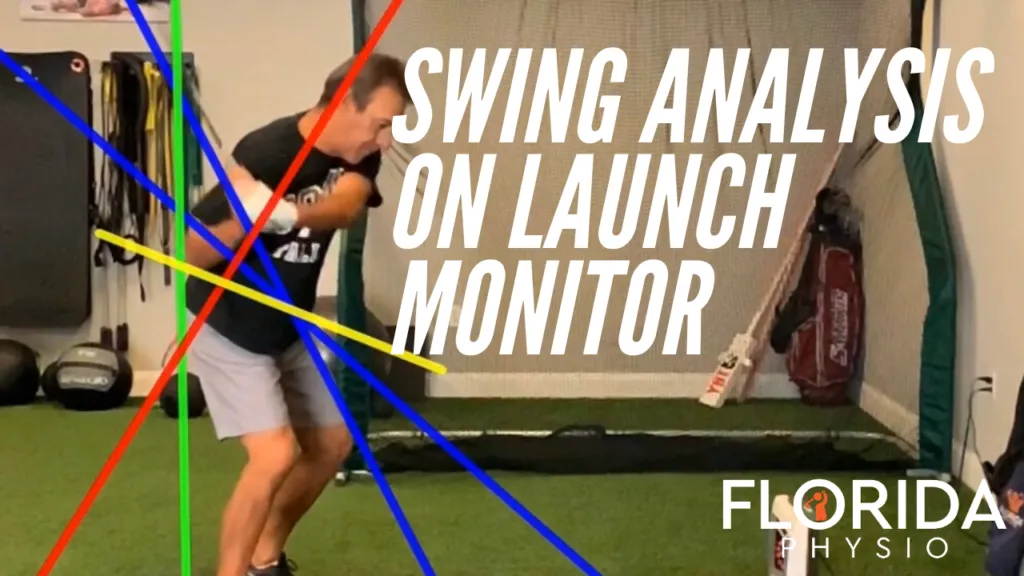
SWING ANALYSIS
As a part of our “Golf Physical,” we take time to look at your golf swing on camera and with our simulator. We draw lines as reference points in the swing. This gives us an idea of what your shoulders, trunk, hands, arms, and hips are doing. We can make a nice connection between what your swing looks like and what your body can do with the TPI screen.
Some of the lines include shaft plane at address and shaft plane at arm parallel. This creates the “slot.” You may have heard of “over-the-top” before. This slow is in reference to that swing characterics.
One of the most common swing faults we see is early extension. This is where your hips come off the start line during the down swing. The head and hips have a relationship, so if we saw the head go back to create room, the hips will go forward.
Our hips can go forward and back (early extension), side to side (sway and slide), as well as rotate (YES!).
Sign up for a Golf Physical to find out more about what your swing looks like and how we can help.
-
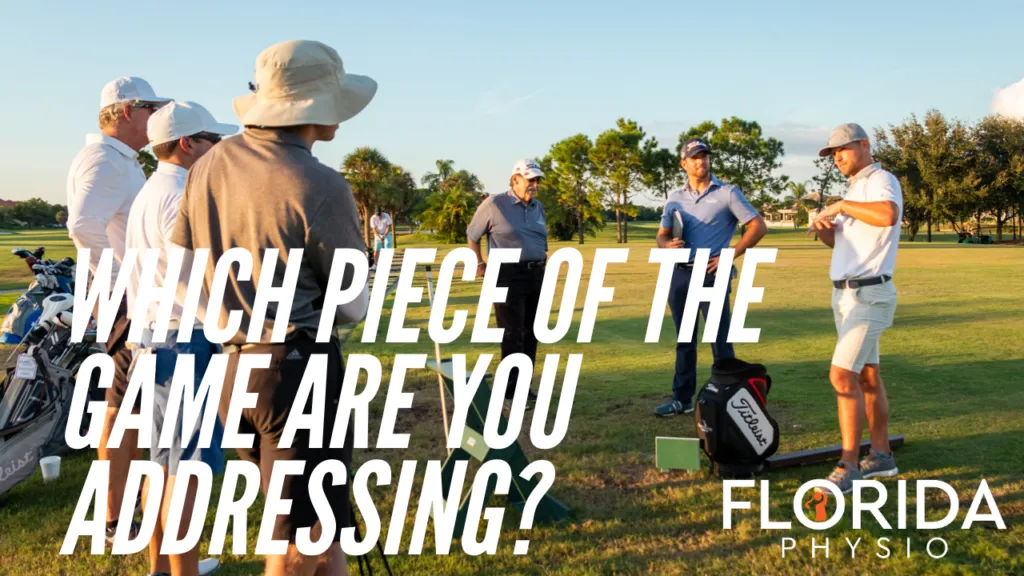
Club Head Speed and Distance Killers — Which one are you addressing?
There are 4 categories in which you can address to improve your driver distance off the tee. In this article, we will discuss the first three.
- Skill and Technique — Swing Coaches
- Equipment — Club Fitters
- Your Body — Physio, Trainer, Chiro, etc
- Mental Game — Swing Coaches, Psychologist
Skill and Technique
This falls in line with the lessons you receive. You might hear your PGA professional tell you to “get more left” or “load into the right hip” as well as many other verbal and visual cues. This area is probably the most important when it comes to consistency, fundamentals of the golf swing, and distance.
Equipment
There are chevy club fitters and Mercedes Benz club fitters. Do your research, avoid the big box stores, ask a friend about their experience. I like the boutique places that are owner operated. Read reviews, ask around, consult with the club fitter before you purchase. This is a big investment but an important one.
You Body’s Ability
What if your swing coach says “load into your turn more” but you physically can’t? Lets back up a bit and change the sport of golf and swinging a club to the made up sport of “lifting your arm.” Everyone has a limit on how high they can lift their arm right? Try it. You might find a firm or uncomfortable restriction at the very end range.
Now what if the instructor for this ridiculous sport analogy proclaimed “you need to lift your arm higher!” That seems silly right? We see this all the time in with golf instructors, but the individual’s body just can’t get to the position to create a good turn, cover the ball, and create speed.
In summary, you should get your body assessed for ability, flexibility, strength, power, speed so that a qualified provider can make a plan and work with you on your body while you are working with the instructor. When the swing starts coming together, then get fitted. Now you’ve covered all 3 bases and can start hitting it further.
-
TOURNAMENT GOLF AND FRIENDLY GAMES ARE THE DIFFERENCE BETWEEN CHESS AND CHECKERS
I have played a ton of tournament golf. This has been at the local, state, and division 1 NCAA levels. I’ve shot 64’s and 84’s. Nerves definitely play a factor, maybe the largest.
I had the privilege of playing with two amateurs faIrly new to golf over the last month in “meaningful” events. The pressure seemed to get the best of them.
Richard Ficca was one of those amateur golfers. He owns Gorilla Bench Training Center. He held records in power lifting and bench press. Visit his gym here: http://www.gorillabench.com
He and I had made a bet with me that he could put his bench press ability against my golfing ability.
However many times he could bench press 225 pounds versus me attempting the weight would be how many strokes he would get on the golf course. He did 55 reps, I did 1. See the video here: https://www.instagram.com/p/B4d44psFglg/
So we proceeded later that week to play golf at Seminole Lake Country club https://www.seminolelake.net . He had a 54 shot lead (or 3 shots a hole). During the round, I remember everyone kept doing the math of where the match stood. Rich and his “caddy” were calculating “the number” in his head after every couple holes.
I felt comfortable, I could tell he had nerves. I knew that a thought process directed about “results” would make it difficult for him. I just took each shot, one shot at a time. Thats all I could control!
At the end, I had shot a three under 68 and Rich had a 127, I had clipped him by 59 shots. This was a fun event where we raised over $1000 for charity.
The second amateur was a client of mine who had never played in any Men’s Association events at our club. I convinced him to partner with me in the Member/Member. He was constantly evaluating where we stood, what the other guys in our group were doing. I had to explain to him one shot at a time, you can only control the current shot you have. There is a lot to be gained by staying present in the moment.
Finally, one of the professional golfers that works at our Physical Therapy and Golf Performance Center on Ulmerton road in Clearwater explained to me that he doesn’t look at his score as a true evaluation of how well he played. He looked at how well he played by how focused he was on the shot in front of him and not the results.
Our training at Florida Physio is very much like this. We have to worry about one problem area at a time, chip away at it, and then move on to the next so that our clients meet their goals. Here is an example of this with another player. https://www.instagram.com/p/B4xWo0JFTrh/ .
The point is, you can only control what’s in front you. Take it one shot at a time, stick to your routine, and you’ll shave strokes.